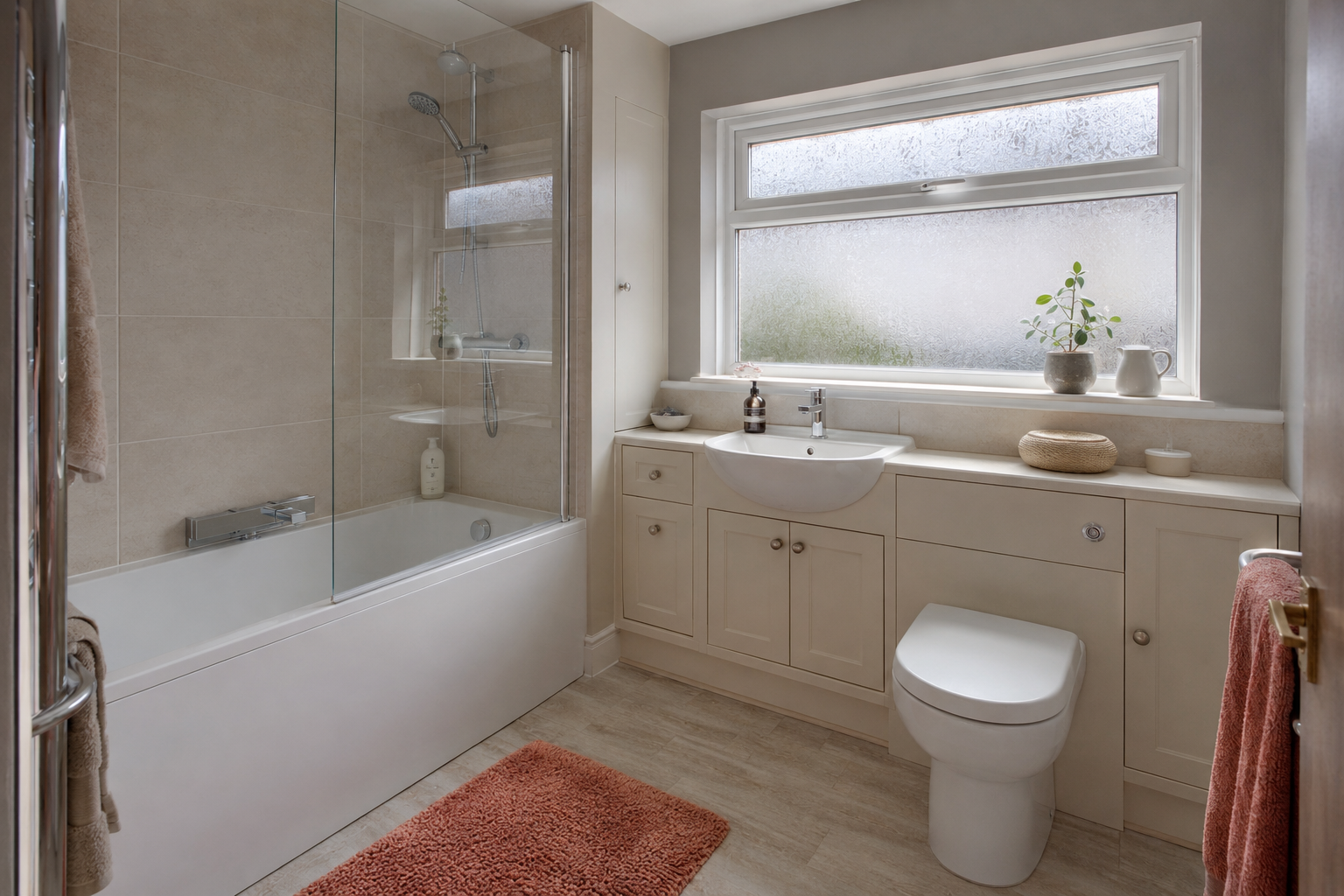
Deal with leaks and loose fittings first
A dripping shower, a basin that moves or damp flooring needs attention before you spend money on a new colour scheme. Find out what is causing the problem. A worn seal, damaged pipe and leaking waste connection need different repairs. Covering the area with new panels or tiles will not stop a leak behind them, and the new finish may have to come off again.
If water is reaching electrical equipment, stop using the affected equipment and get qualified help. A loose toilet or shower screen also deserves prompt attention. For less urgent problems, take a photograph and note when they happen: after a shower, when the basin drains or even when nobody has used the room. This gives the person inspecting the bathroom something useful to work from.
Replace the fitting that makes washing difficult
Think about the part of the room that causes trouble every day. Perhaps the bath side is difficult to step over, the shower door catches the basin or the sink is too small to wash comfortably. Those problems usually deserve more of the budget than a fashionable tap. Write down the difficulty itself, so the proposed replacement can be checked against what you need.
A bath-to-shower conversion can change how you use the room, but it is not automatically the answer for every household. Children, visiting relatives and anyone who prefers a bath may have different needs. A larger shower can also leave less room for a toilet or cupboard. Compare the complete layout, including the space for getting in, drying yourself and reaching a towel.
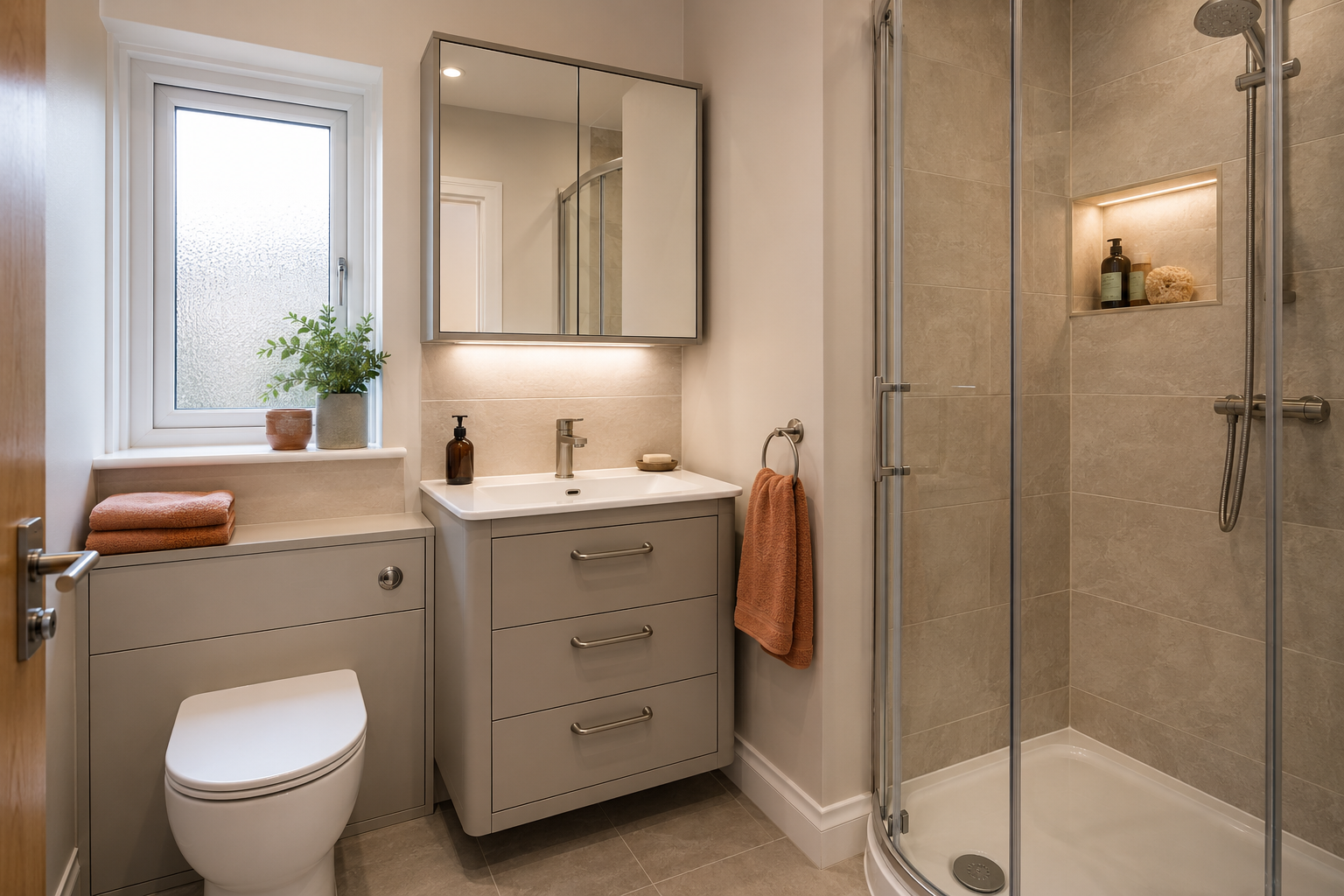
Check what can stay in good condition
An existing bath or basin does not need replacing simply because you dislike the tiles around it. Check for damage, movement, difficult cleaning and whether replacement taps or waste fittings will suit it. Keeping a sound fitting may save buying another, although removing surrounding finishes without damaging it can still involve careful work. Ask for the cost and limitations of keeping it.
Mixing old and new fittings needs a little thought. White ceramics can differ in shade, and shiny chrome beside aged brass may look accidental. More practically, a new basin cabinet may not meet the old flooring neatly. Ask how any exposed gaps will be finished. A small saving on one fitting can disappear if several surrounding surfaces need repair to make the change work.
Improve storage before adding decorative extras
A bathroom often feels untidy because everyday things have nowhere to go. Look at what is left around the basin and bath: toothbrushes, shaving equipment, shampoo and spare towels. A suitable basin cabinet or mirrored cupboard may help more than a larger basin alone. Check that its shelves or drawers will hold the items you actually use, rather than judging it only with the doors closed.
Do not fill every gap with a cupboard. You still need room to stand, turn and clean. Drawer fronts must clear the toilet and door, while a mirrored cabinet should not project awkwardly over the basin. Recessed storage needs the wall construction checked before it is promised. Keep access to important valves and connections available when storage is fitted around pipework.
Plan hidden work before the final surfaces
Pipework, wiring and ventilation are easy to overlook because they do not appear in a finished-room photograph. They can have a big effect on comfort and reliability. Tell the fitter about weak shower flow, slow drainage, persistent condensation or poor lighting. The cause needs checking; buying a more expensive visible fitting does not necessarily solve a problem elsewhere in the system.
Decide on features such as an illuminated mirror or an additional shower outlet early, before walls are closed. A qualified electrician should advise on bathroom electrical work, including suitable fittings and their positions. The installer should also explain access for future servicing. A neatly hidden connection is less helpful if the only way to reach it later is to damage newly fitted tiles.
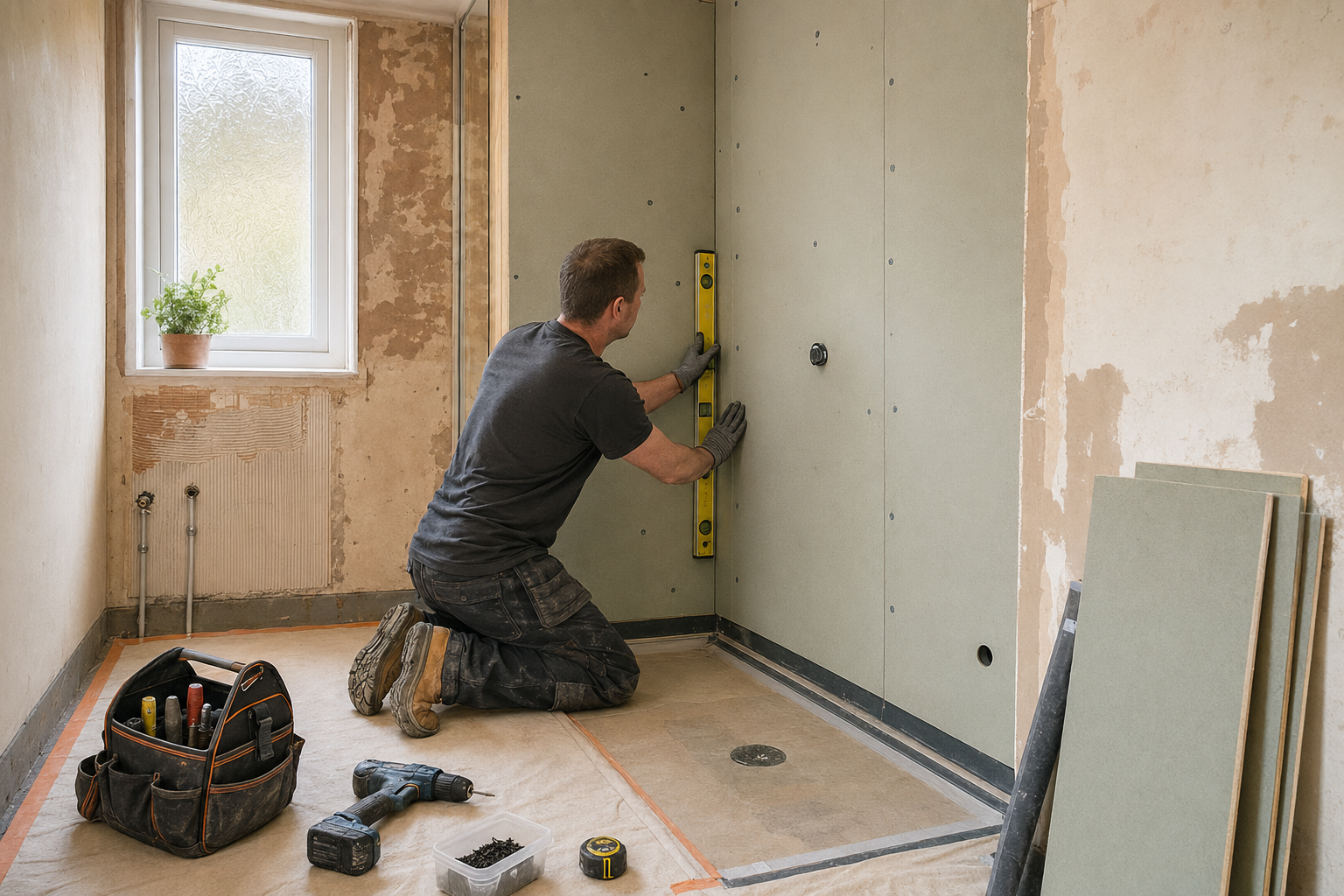
Put the work in a sensible order
Separate your list into repairs that cannot wait, changes that improve everyday use and extras you would enjoy if the budget allows. Bring this list to the home appointment. Ask which jobs need doing together and which can sensibly wait. For example, replacing the floor now and moving the toilet later may mean disturbing the same area twice, so a combined plan could be more practical.
Keep the written quote tied to the agreed list. It should explain what is supplied, what is removed, how the room is prepared and which finishing work is included. Do not assume a lower price covers the same jobs. Before you approve anything, check that the changes solve your original problems and that you understand what will remain as it is. That is a better starting point than replacing everything by habit.
For the fitting service, see bathroom replacement in kilmarnock. You can also read updating a dated bathroom and avoiding unexpected bathroom costs.