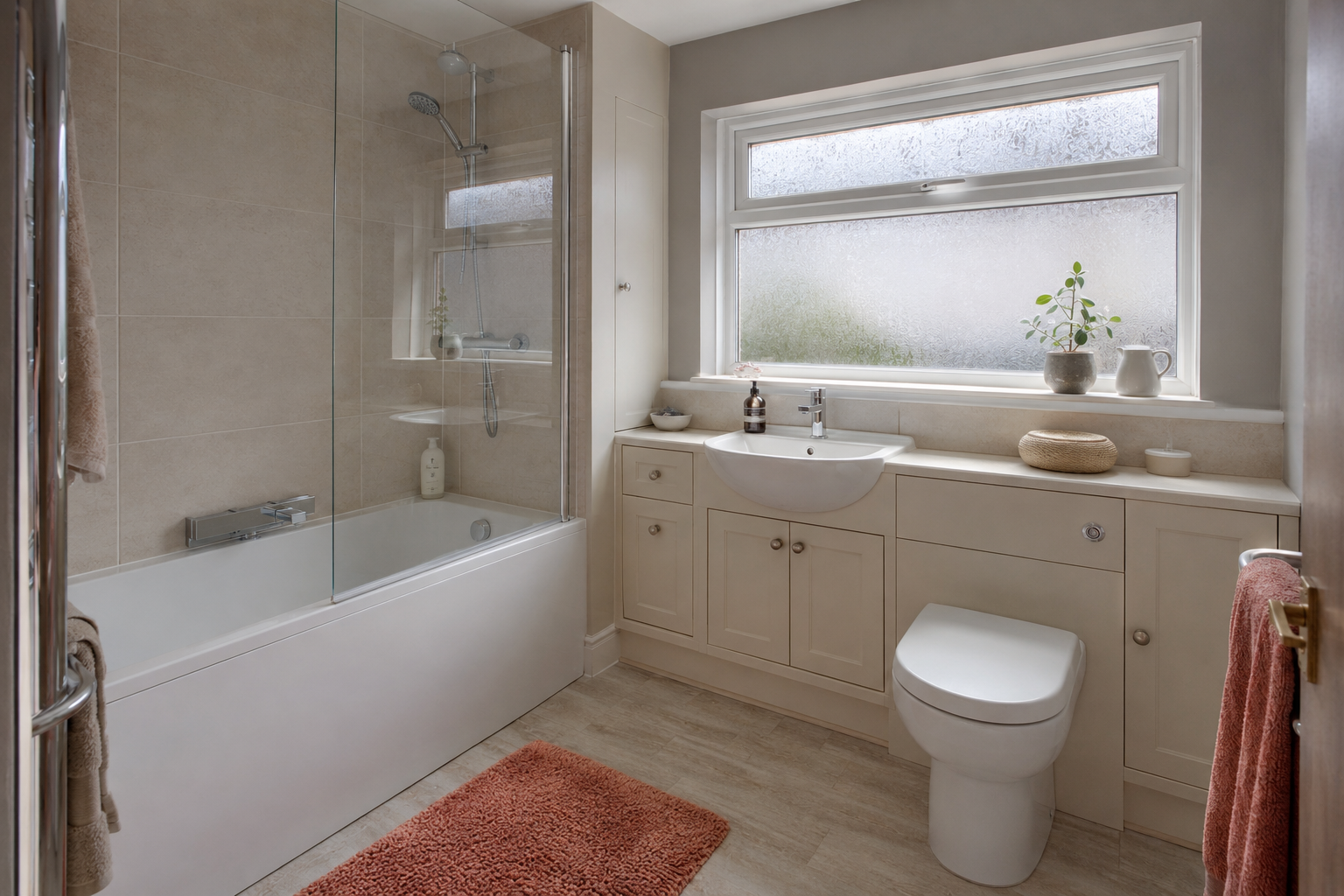
Look beyond the colour of the old suite
A bathroom can look dated while still having a workable layout. Before deciding to replace everything, identify what is actually wrong. Worn finishes, a weak shower, limited storage and poor lighting need different solutions. Make a short list of those issues and photograph the room from the doorway and each corner. The photographs can help explain awkward spaces during the first design discussion.
Think about the fittings you still use comfortably. A bath that suits the household may be worth keeping in the same position, even if the surrounding walls and furniture change. Check its condition and what the work around it would involve before making that decision. Keeping a fitting is useful only when it remains suitable for the new bathroom and can be protected during the installation.
Improve the arrangement before ordering a new look
A more practical layout can be a bigger improvement than a fashionable finish. Look at the route between the door, basin, toilet and shower. Note where drawers or screens obstruct movement. A shallower cabinet or a different screen opening might solve a problem without moving every connection. Compare those smaller changes with a more extensive layout alteration using a measured drawing.
If relocating fittings is proposed, understand the work below the floor and behind the walls. The toilet drain and shower waste can limit the positions that are straightforward to achieve. Moving them may still be worthwhile, but the benefit should be clear. Keep the reason for each change beside the plan so the project does not grow simply because a product display shows a different arrangement.
Give everyday items a useful place
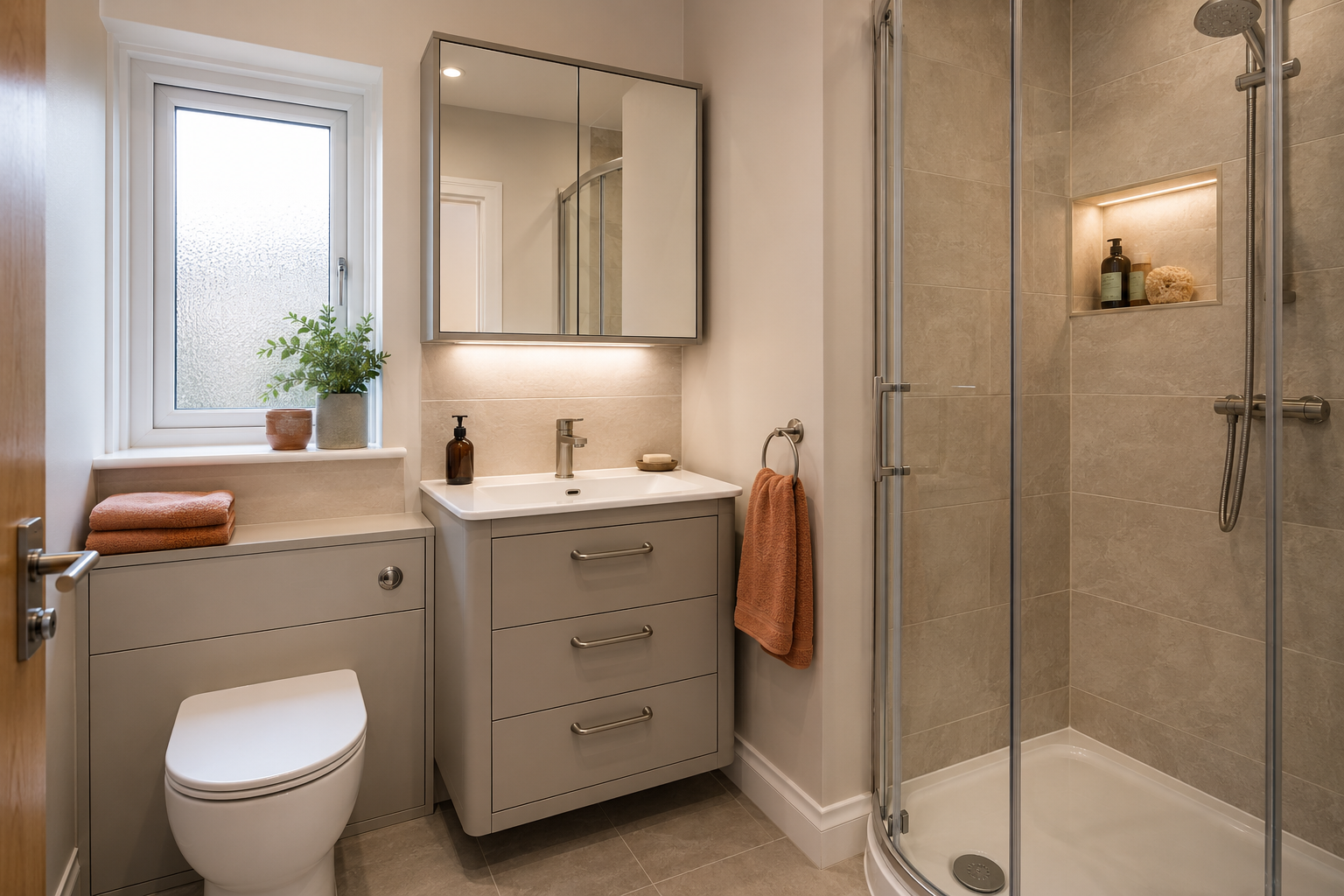
A lack of storage often makes an older bathroom feel more cluttered than it needs to. Count the items that live around the basin and decide which need to stay within easy reach. A basin cabinet can hide spare supplies, while a mirrored cupboard may suit smaller daily items. Compare usable internal space, not just the size of the furniture front shown in a photograph.
Take account of pipes, shelves and drawer openings. A deep cabinet that narrows the route through the bathroom may be less helpful than a smaller unit with well-used drawers. A recessed shower shelf can hold bottles, but its construction and waterproofing need planning before the wall is finished. Avoid adding freestanding storage wherever there is a gap without checking how people will move around it when the room is busy.
Choose walls, flooring and metal finishes together
Replacing several competing patterns with a simpler set of finishes can change the appearance of the room. View actual samples beside the furniture and under the bathroom lighting. Similar colour names do not guarantee a match, particularly between different tap and accessory ranges. Decide which surfaces should provide the main pattern or colour, then judge the remaining choices alongside them.
Cleaning matters as much as the first impression. Panels, tiles, grout and decorative metal finishes have their own care requirements. Ask what is involved in looking after the actual products you are considering. New surfaces must not cover unresolved leaks or damage beneath the old bathroom. Include the appropriate preparation in the quote even where it contributes little to the visible change in the finished room.
Make lighting and ventilation part of the update
An old central light may leave the mirror area poorly lit or cast shadows where you need to see clearly. Discuss suitable general and mirror lighting with a qualified electrician. Check the positions, controls and any powered mirror features before walls or ceilings are finished. A decorative light should not be the only improvement if everyday washing and grooming remain difficult.
Have ventilation assessed as part of the planned work. Persistent moisture marks need their cause investigated rather than being hidden by a fresh finish. Ask how any proposed fan is operated and maintained, and include the necessary electrical work in the quote. Window privacy also deserves attention when changing the room. Check the actual view into the bathroom under the lighting conditions in which it will be used.
Spend on the changes that solve the main problems
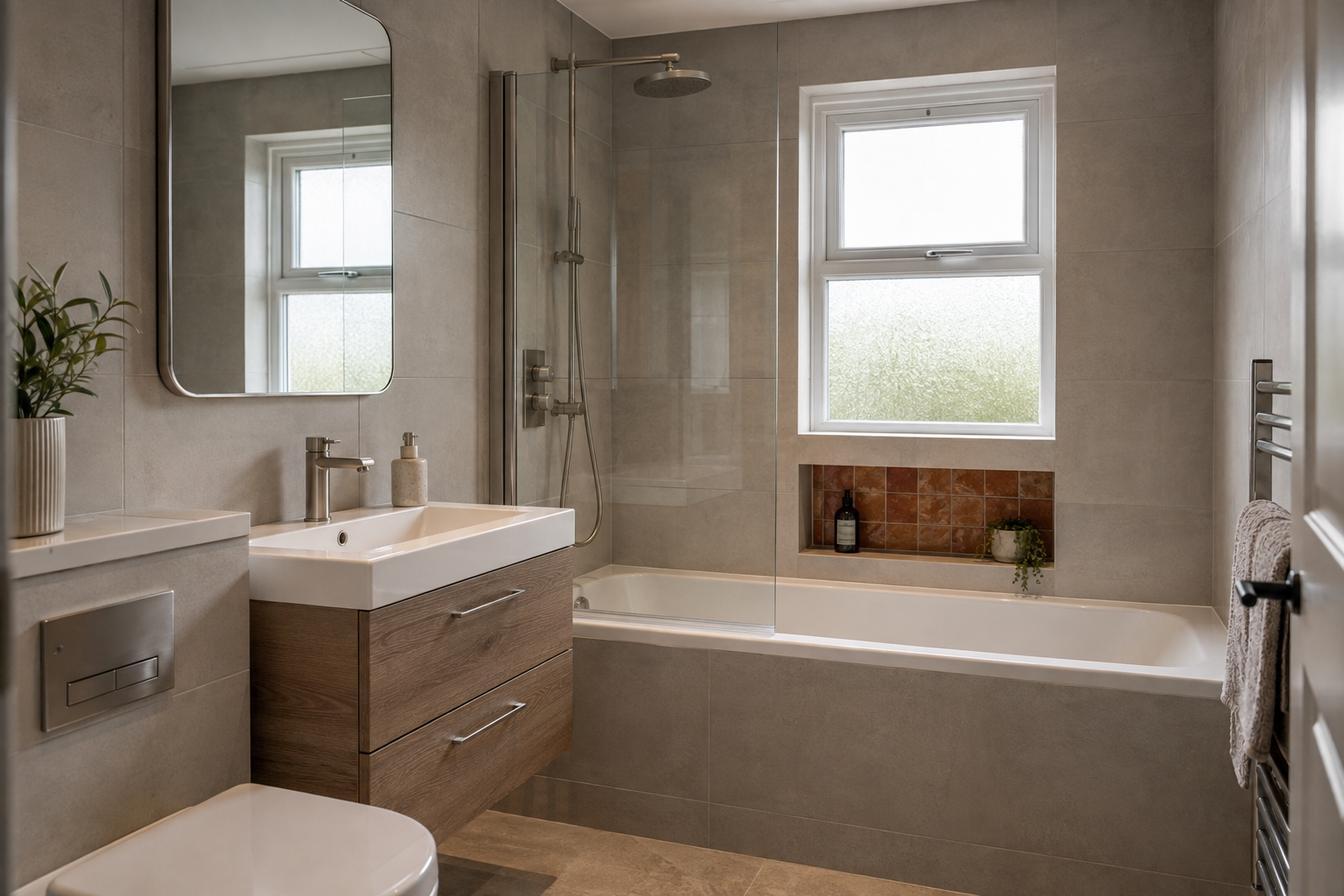
When the products and work are listed, return to your original priorities. Check that the quote addresses the uncomfortable shower, missing storage or damaged surfaces before optional upgrades consume the budget. Keeping suitable fitting positions or selecting a simpler finish may help control work, but compare complete fitted costs. A cheaper product can still require more preparation or additional parts than the alternative.
Agree the final layout and product list in writing, including anything being retained. If a choice changes, check its effect on nearby fittings and the installation price. A successful update does not need to make the bathroom unrecognisable. It should remove the daily frustrations, provide fittings you can use comfortably and give you surfaces and storage that are straightforward to look after long after the room first looks new.
For the fitting service, see bathroom renovations in kilmarnock. You can also read which bathroom features to replace first and storage for a narrow bathroom.