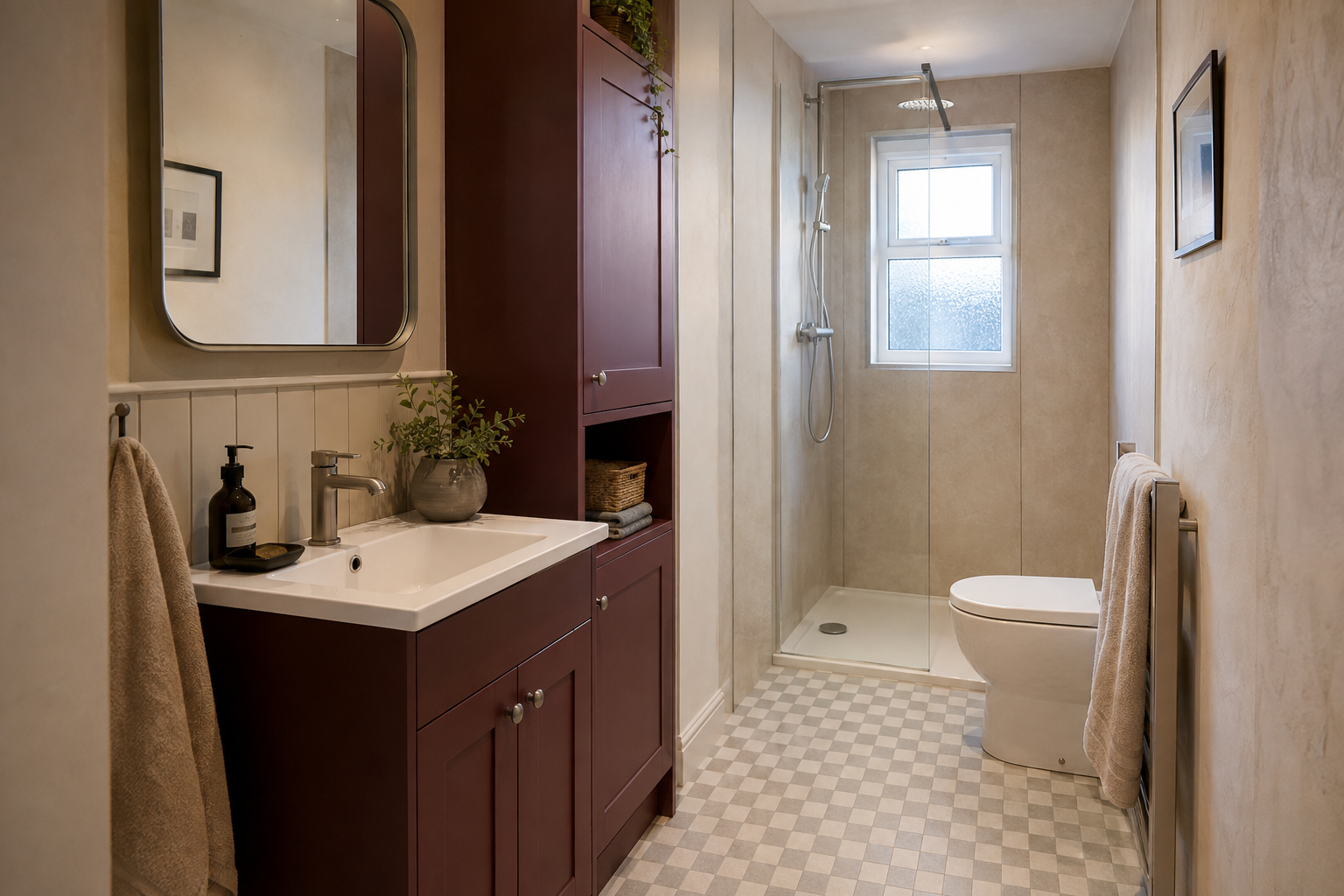
Sort the things you need beside each fitting
Before choosing cupboards, look at what is normally left around the bathroom. Separate the things you use every day from spare bottles, cleaning supplies and occasional items. Toothbrushes belong near the basin; shampoo needs to be reachable from the shower. Spare towels may be better stored outside a very narrow room. This gives you a practical storage list instead of a reason to fill every empty wall.
Check the size of the items too. A shallow cabinet that holds small bottles may not take your usual toiletries upright. Drawers can lose space to plumbing, and shelves may not be adjustable. Take a few measurements before shopping. Storage should make everyday routines easier, so the useful internal space matters more than how substantial a unit looks from the outside.
Choose a basin cabinet without narrowing the walkway
A basin cabinet can combine two jobs in one place, but check how far it projects from the wall. In a narrow bathroom, a deep cabinet may reduce the space in front of the toilet or shower. Compare shallower models using the actual room plan. The basin still needs to be comfortable to use, with a tap position and bowl that suit ordinary washing.
Open the proposed drawers or doors on the drawing. They must clear nearby fittings and leave somewhere for you to stand. Ask how the waste pipe and water connections affect the storage inside. A large-looking drawer may have a shaped cut-out or reduced depth. Knowing this before ordering helps avoid replacing visible clutter with a cupboard that cannot hold the things you wanted to put away.
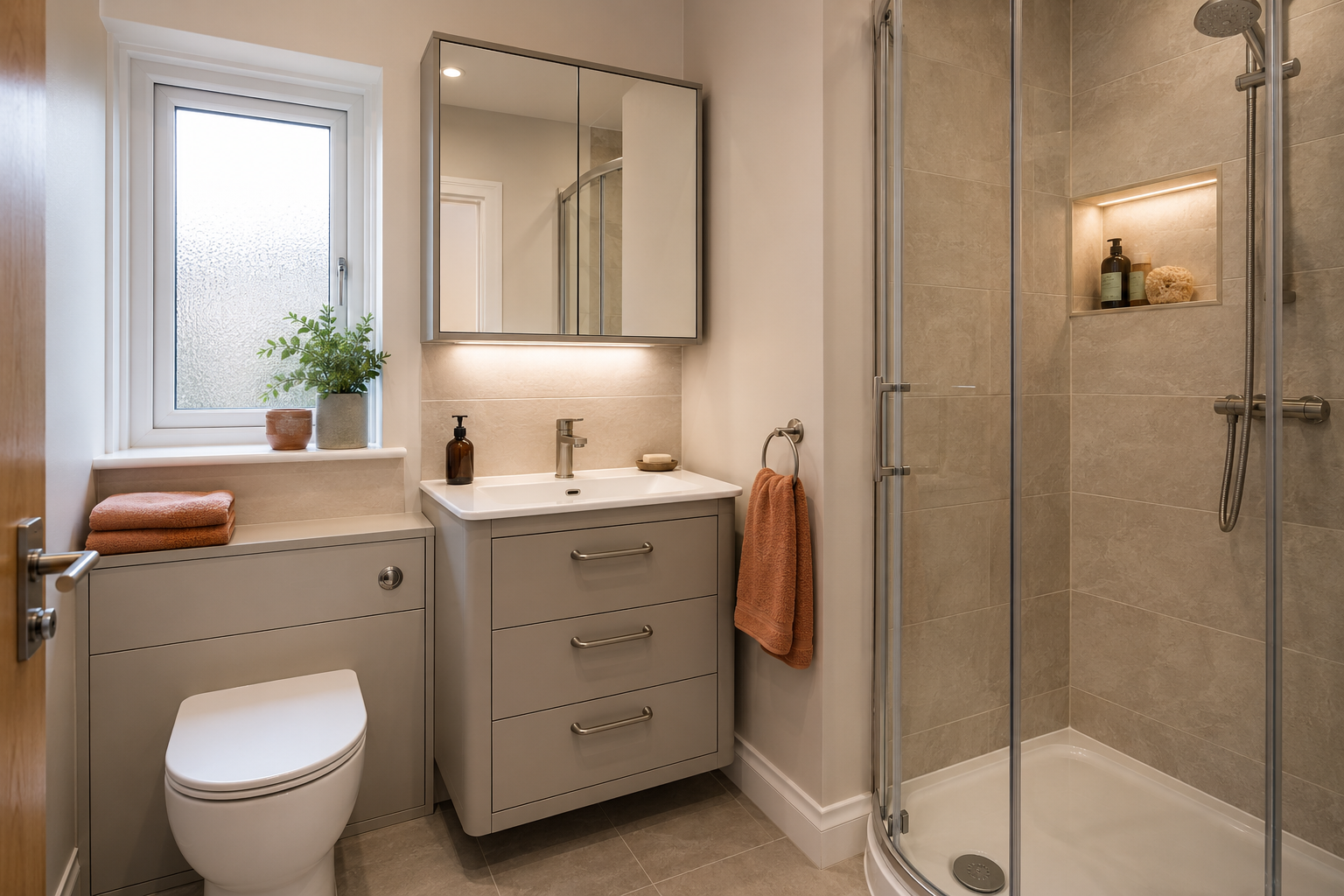
Use mirrored cabinets and wall space carefully
A mirrored cabinet can keep small daily items near the basin without adding another floor-standing unit. Check its depth and position so it does not crowd the washing area or interfere with a window. Make sure the door opens comfortably and that its shelves can be reached by the people who need them. A useful mirror height and useful storage height are not always exactly the same.
Open shelves can work for a few regularly used items, but they collect dust and splashes too. Do not place them where you will catch your shoulder or head as you move around the room. Keep heavy items and household cleaning products stored safely for your household. Wall-mounted storage also needs suitable fixings for the wall and the load, so discuss that with the fitter rather than assuming any surface will do.
Keep shower bottles off the floor
A properly placed shower shelf or basket can keep bottles away from the tray and entrance. Choose a position you can reach without stepping awkwardly out of the spray or leaning across the enclosure. Check that it does not narrow your standing space or catch your arm. Removable baskets can be easier to clean, but their fixings and finish still need to suit the installation.
A shelf built into the wall keeps bottles out of your way inside the shower. It is only suitable where the construction and wet-area detailing allow it. Ask the installer to check before making it a central part of the design. Agree its size and height around the bottles you use, and plan how its edges and surface will be finished with the chosen tiles or panels.
Give towels a place to dry and hang
Think about towels during the layout stage, not after every spare wall has been covered. You need to reach a towel from the bath or shower without blocking the entrance. Hooks and rails should also leave clear space around the basin and toilet. If several people share the room, one small hook may not be enough to keep damp towels apart and easy to use.
A heated towel rail has its own installation and heat-output considerations, so choose it with advice rather than assuming it will heat any bathroom on its own. Keep its position clear of awkward door swings and furniture. Spare dry towels can go in a separate cupboard if the room is tight. Trying to store the household's full supply inside a small bathroom may make the daily layout worse.
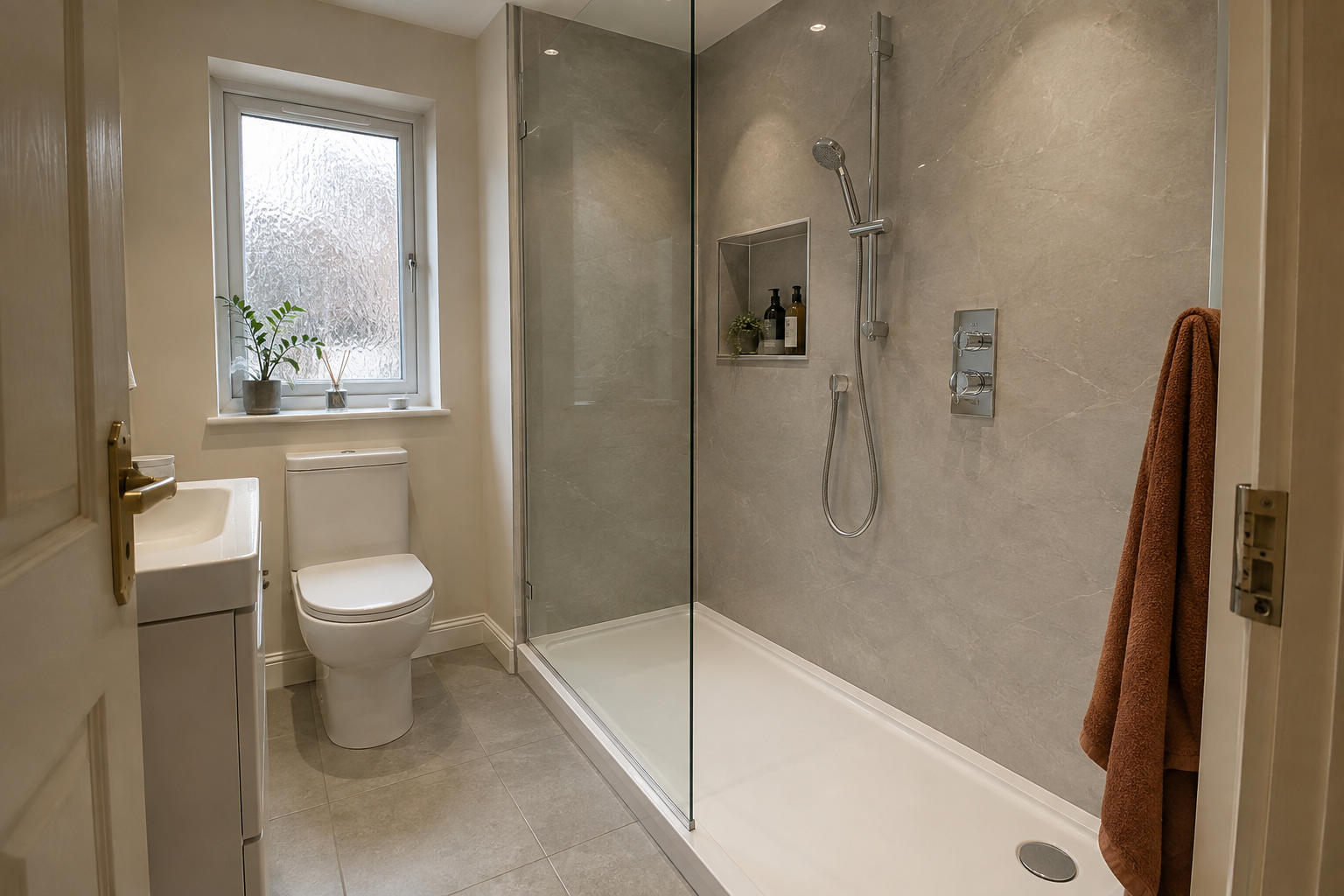
Leave room for cleaning and maintenance
Storage should not hide a leak or make essential fittings impossible to reach. Ask how valves, cistern parts and waste connections can be accessed after cabinets are installed. Look at the gaps around furniture and whether you can wipe or mop them. A narrow slot beside a unit may be large enough to collect dirt but too small to clean comfortably.
Finish by checking the whole room with cupboards open, towels hanging and everyday items in place. Remove storage that adds little practical value or blocks movement. Keep the chosen sizes and locations with the fitting plan so they are not guessed on installation day. A narrow bathroom does not need the greatest possible number of cupboards; it needs enough useful storage in places that support the way you wash, dress and clean.
For the fitting service, see space-saving bathrooms in kilmarnock. You can also read choosing compact basins and toilets and planning a small bathroom layout.