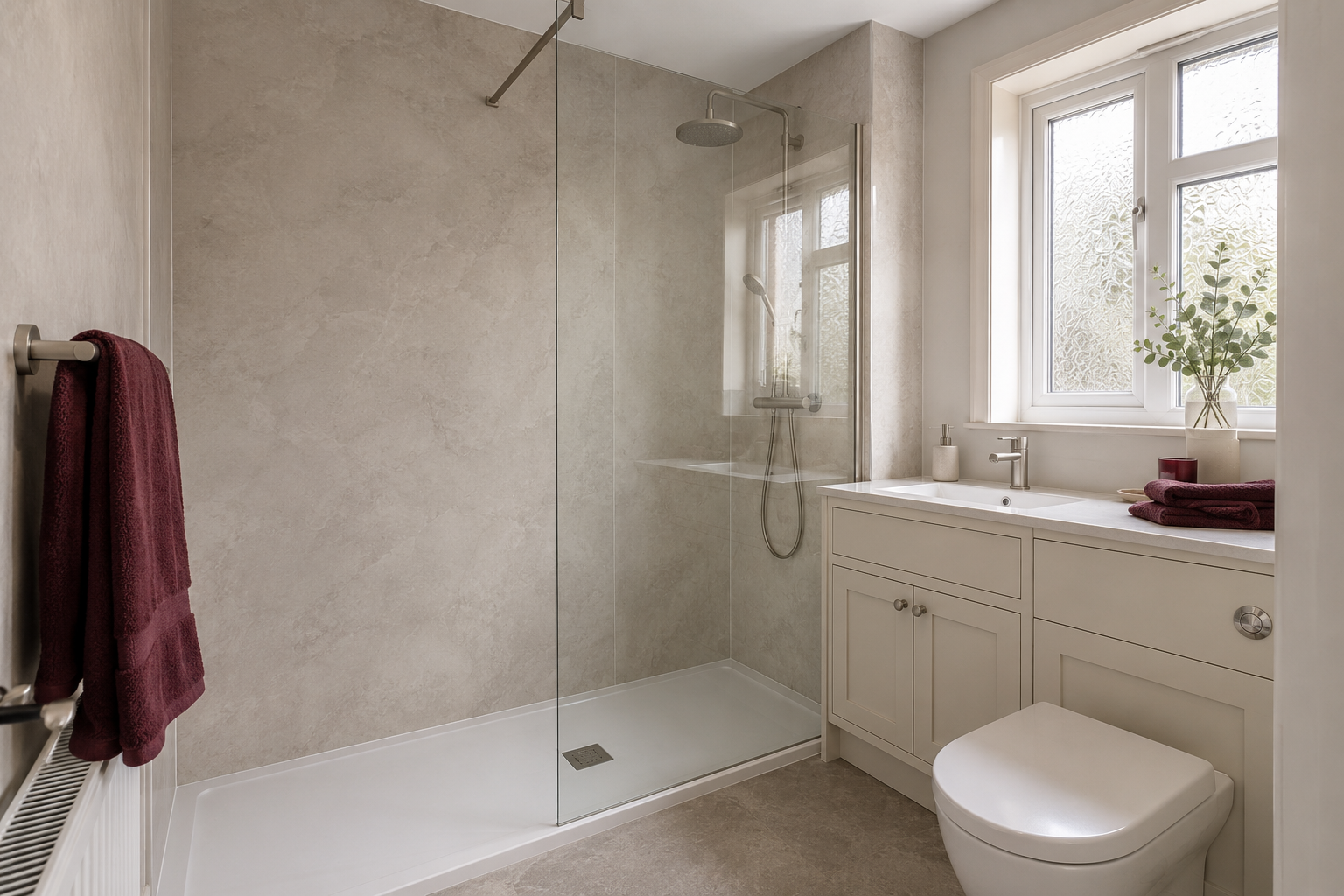
Compare the same areas of the bathroom
Start by marking which walls you want covered. A quote for panels inside the shower cannot be compared directly with a quote for tiles around the whole room. Include the wall height, window recesses, bath area and any decorative section behind the basin. Ask both quotations to cover the same areas, with the same removal and preparation work, before deciding which finish costs less.
Think about the result you want as well as the initial price. Tiles offer a wide choice of sizes, patterns and combinations. Wall panels give larger uninterrupted surfaces with joints and trims arranged to suit the chosen system. Neither description tells you the final installed cost on its own. A straightforward room and one with many corners or recesses may need very different amounts of cutting and finishing.
Preparation matters whichever finish you choose
The surface beneath the finish needs to be suitable for the installation. Loose tiles, damp damage or an uneven wall cannot be ignored because a new covering is going over them. Ask what the installer has allowed for before the tiles or panels are fitted. If the existing bathroom must be removed before the condition can be confirmed, the quote should make that uncertainty clear.
Some products can be installed over suitable existing surfaces, but that depends on their instructions and the actual wall condition. Do not assume fitting over the existing tiles is always possible or always cheaper. Extra thickness can affect shower fittings, window details and the edges where the new finish meets the rest of the room. The fitter should explain the proposed method and how these details will be finished.
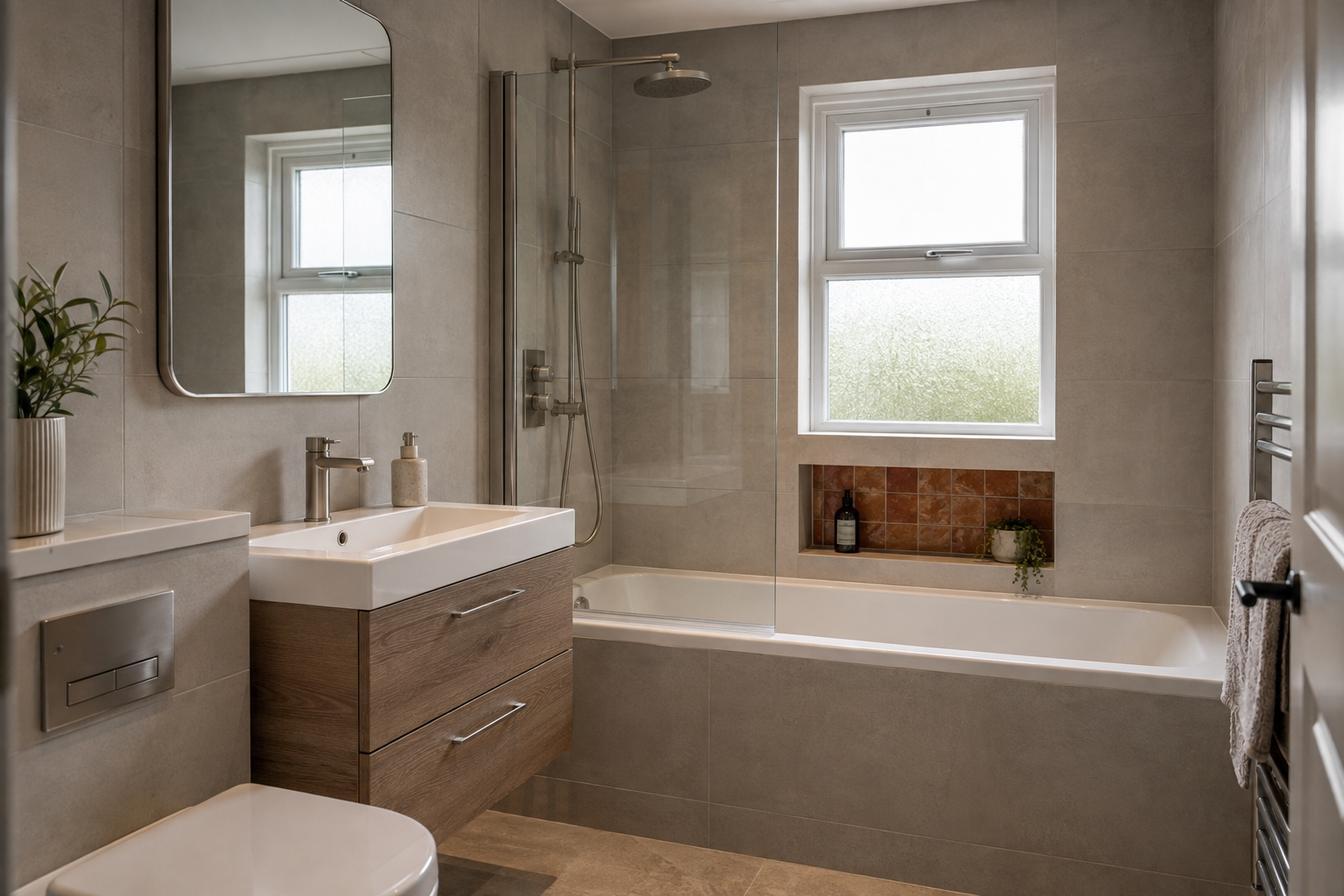
Tile choices can change the fitting work
The tile price is only part of a tiled-wall quotation. Size, pattern, cuts and the condition underneath influence the work involved. A patterned arrangement needs setting out carefully, while large tiles still need suitable preparation and handling. Recessed shelves, short wall sections around corners and changes of direction add details that are not obvious when you compare the price of a single box of tiles.
Ask whether adhesive, grout, edge trims and any required waterproofing are included. These should suit the selected products and where they are used. A tile surface alone is not a complete explanation of how the shower walls will be protected from water. Keep the chosen tile name and finish in the quote so an apparently similar substitute is not fitted without discussion.
Panel systems have different specifications
Bathroom wall panels are available in different materials, sizes and finishes. The word panel does not identify one standard product. Ask which system is proposed, where it is suitable and how the joints, corners and edges will be made. Check whether the quote includes the necessary trims, adhesive, seals and finishing around the shower tray or bath, rather than treating them as small extras.
Panel size can affect how many joints appear and how the finish fits around a window. Samples are helpful, but a small sample does not show the whole pattern or the joint detail. Look at the manufacturer's images and ask the installer to explain the layout on your own walls. A clear plan is more useful than choosing panels on a broad promise that fitting is always quick.
Include cleaning and future repairs in the decision
Panels generally avoid the many grout lines found in a tiled wall, although their joints and seals still need care. Tiles and grout have their own cleaning requirements, which vary with the material and finish. Ask for the actual care instructions before choosing cleaning products. Strong chemicals or abrasive tools can damage some finishes, so easy cleaning should be checked against the product rather than assumed.
Think about how a damaged section could be repaired. With tiles, keeping a few spares from the same batch can be helpful. With panels, availability, joint design and access may affect replacement. Neither finish is maintenance-free. Ask how the shower valve or concealed pipework can be reached if it needs attention later, and whether the proposed wall arrangement makes that access practical.
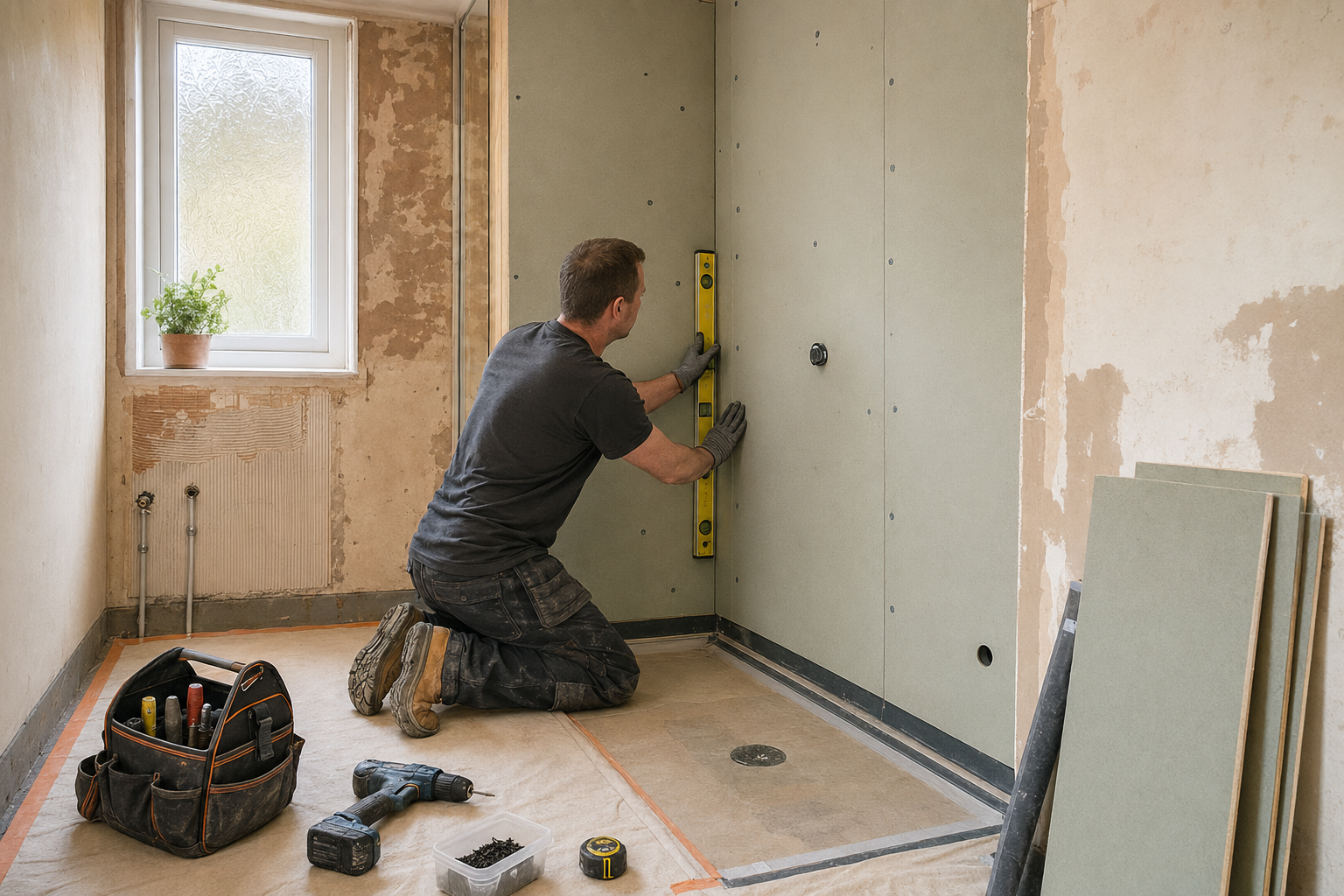
Choose from written installed prices
Ask for the total installed price of each option on the same bathroom plan. Check removal, preparation, waterproofing where required, materials, fitting and waste removal. If one quote excludes repairing the walls, it may appear cheaper while leaving an important part of the work unpriced. Ask how additional repairs would be approved if something unexpected is found when the old finish comes off.
You can also combine finishes when that suits the room and budget, such as a defined shower area and a different finish elsewhere. The junctions still need planning and a clear quotation. Choose the option whose appearance, cleaning needs and installed cost you understand. A bathroom fitter can then price your actual walls, rather than relying on a general claim that tiles or panels are always the better value.
For the fitting service, see bathroom wall panel fitting in kilmarnock. You can also read what affects bathroom refit costs and comparing bathroom quotations.